Latina Equal Pay: The Fight for Pay Equity Persists Despite Progress
Latina Equal Pay Day has become an opportunity to change the narrative around pay equity

Photo by Valerie Sigamani on Unsplash

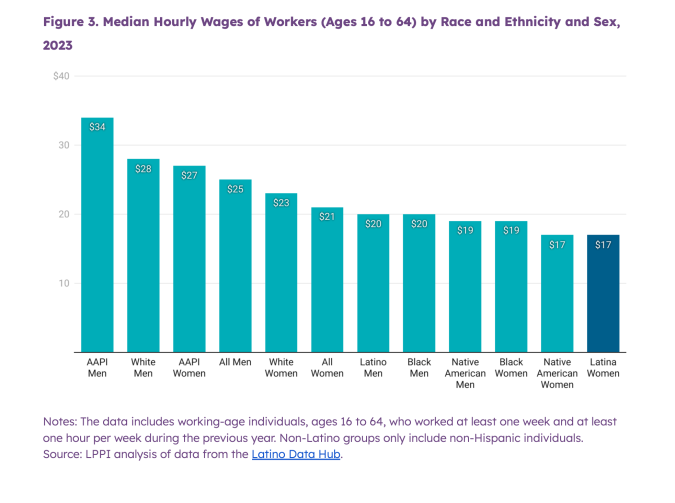
Over the past several decades, Latinas have proven they are the driving force in their communities, families, and the United States economy. Whether it’s contributing $1.3 trillion to the GDP, or thriving in entrepreneurship, Latinas are leaving their mark. However, the job market continues to fail them when it comes to pay equity. On October 8 this year, the U.S. marks Latina Equal Pay Day, representing the day Latinas have to work into the new year to catch up to what their white, non-Latino male counterparts made the previous year. The numbers are clear, according to a new study by UCLA’s Latino Policy and Politics Institute, Latinas have the lowest median hourly wage of any racial or ethnic group. Losing over $1 million to the wage gap over the length of their career. Even more, in 2023, the median hourly wage for Latinas in the U.S. was only $17 per hour, which is $8 less than all men, $11 less than their white male peers and half of what Asian American and Pacific Islander (AAPI) men earn.
These numbers are a symptom of a much larger issue advocates are pushing to eradicate.
Beyond their Degrees, Latinas are Undervalued Experts
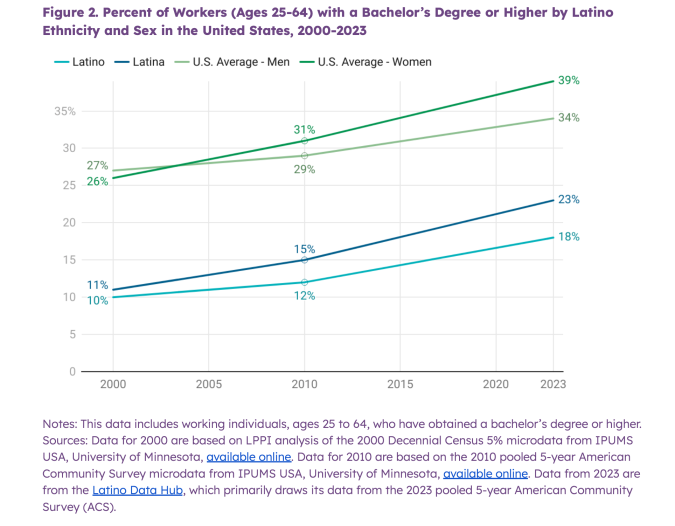
Latinas are incredible achievers. In the last two decades, the number of Latinas with bachelor degrees or higher has more than doubled from 11 percent in 2000 to 23 percent in 2023. However, as Dr. Amada Armenta, faculty director of the UCLA Latino Policy and Politics Institute, tells HipLatina, “the system continues to fail them” as they remain the lowest-paid group in the American workforce.
A Latina with a bachelor’s degree still makes less than her Latino and white male counterparts with the same degree, earning a median hourly wage of $28 compared to $34 for Latino men and $43 for white men.
“The problem is complex, but it stems from unequal access to high-paying jobs, and a pattern of discrimination that undervalues our experience and work,” she says.
In a movement to close the pay gap, Justice for Migrant Women, an organization championing migrant and rural women’s right to live and work with dignity and without fear, is challenging misconceptions about Latinas in the workforce.
“A damaging misconception is that Latinas choose low pay or ‘flexibility’ over fair wages,” Mónica Ramirez, founder and president of Justice for Migrant Women, tells HipLatina. “The truth is that many Latinas work in industries that have been historically undervalued and underprotected, such as care, food service, agriculture, and hospitality. These are essential jobs that sustain our economy, yet the workers behind them are often denied basic rights like fair pay, paid leave, and workplace safety.”
This is a stark reminder that the work and experience of Latinas is consistently undervalued in a system that still positions them as passive participants in the economy. But it’s evident the issue is not lack of effort or ambition, but the fundamental lack of opportunities, equity, and recognition.
Multilayered inequity in pay affects Latinas at all levels
From rural communities to urban centers, Latinas across the country are affected by pay inequity. For those in rural communities, the challenges are compounded.
“Rural Latinas face multiple, overlapping barriers that compound the wage gap,” Ramirez says. “From limited access to reliable transportation and affordable childcare, to fewer job opportunities and weaker labor protections in the industries that dominate rural economies, such as agriculture, food processing, and manufacturing.”
The American Community Survey shows that Latinas in rural communities are paid on average 43 cents for every dollar made by white, non-Hispanic men. Additionally, Ramirez states many face language barriers and immigration-related vulnerabilities that limit their ability to report abuse or mistreatment.
“Policy responses must reflect these on-the-ground realities,” Ramirez adds. “That means investing in rural infrastructure, from broadband and transportation to childcare and healthcare, and strengthening enforcement of labor standards in industries that often escape oversight.”
These policy changes should also keep in mind rural communities and workers through the implementation of programs like childcare subsidies, workforce development, and wage protection.
“Only by addressing these local inequities can we create pathways for rural Latinas to secure safe, stable, and fairly paid work,” Ramirez says.
The country of origin plays another significant role in the wage gap. Armenta notes an important finding in the UCLA report showing that Guatemalan and Honduran Latinas earn over 50 cents per dollar compared to their white male counterparts. Meanwhile, Chilean and Argentine Latinas earn closer to 80 cents per dollar.
Location is also important. Latinas in California, the state with the largest Latina population, face the widest gap earning just 49 cents on the dollar. In contrast, Latinas in Vermont earn 96 cents on the dollar. These patterns reflect “differences in local labor markets, cost of living, immigration histories, educational attainment, legal status, and industry composition.”
Access to higher paying jobs is also an important step in the fight for progress. According to the Lean In 2024 State of Latinas in Corporate America report, Latinas represent only 1 percent of C-suite roles across corporate America. The report also found that in 2023, between the entry level and the C-suite, white men’s representation increased by 64 percent while Latinas’ decreased by 78 percent—the most of any group.
“Latinas remain disproportionately concentrated in low-wage jobs, limiting access to advancement opportunities and contributing to the widest wage gap of any demographic group,” Anna Dapelo-Garcia, founder and president of Lean In Latinas. “To truly close the wage gap, we must focus on creating pathways for Latinas to advance up the career ladder and into leadership positions.”
But hope is not lost. Through advocacy and continued efforts to bridge the gap, policymakers are taking note.
Progress in policy
Legislative wins like the federal Pregnant Workers Fairness Act and expanded paid leave laws are promising steps forward. Taking effect in June 2023, this policy requires employers with 15 or more employees to provide “reasonable accommodations” for workers with limitations related to pregnancy, childbirth, or related medical conditions.
Additionally, a growing number of states are leading the way with comprehensive paid family, medical leave programs, and pay transparency. As of 2025, 13 states plus the District of Columbia, have enacted such laws, with others set to begin in 2026.
According to Armenta, states like California, where the pay gap is the widest, are holding employers and industries accountable for ensuring fair compensation.
“The state now makes large companies report their pay data and publish salary ranges, which is a step in the right direction. This kind of transparency makes it harder to hide unfairness. But just making the information public isn’t enough,” she says. “We need real accountability. That means stronger enforcement, companies doing regular pay audits without being told to, and investing in paths for Latinas to get into those higher-wage industries.”
Ramirez agrees, illustrating the greatest legislative gaps still relate to pay inequity despite small victories. “We need stronger pay equity laws like the Paycheck Fairness Act, full enforcement of labor and civil rights protections at the federal and state levels, and employer accountability through internal audits, transparent pay, and equitable promotion pathways.”
She adds, “We also need to ensure that the agencies that enforce these laws are fully funded in order to do the enforcement activity that they are charged with doing under these laws. Without these safeguards, Latinas will continue to face systemic barriers that limit their economic security and opportunities for advancement.”
A collective responsibility to bridge the wage gap
Latinas aren’t going anywhere. In fact, data shows by 2060 they will account for more than 1 in 4 women in the United States. That’s why taking collective action toward closing the pay gap is pivotal to move beyond awareness and drive real change. Advocating for ourselves and each other is a crucial part of the progress that needs to happen. For many Latinas, it can be difficult to ask for more money when we’ve been raised with the idea that we should be grateful for the opportunity. Learning to speak up and asking for the compensation that fits the job require a shift in mindset that allows us to advocate for ourselves.
“Get comfortable with discussing your compensation,” Dapelo-Garcia tells HipLatina. “This is the most important part of the process: practice, practice, practice! Before you step “onto the field” with a prospective employer or your current boss, take time to prepare. Do your homework, know your value, gather data, and be ready to clearly articulate why you deserve the pay you’re asking for. Preparation builds confidence, and confidence drives results.”
Ramirez also urges individuals to “take action” and “get loud” on Latina Equal Pay Day, calling on elected officials to pass policies that protect the economic interests of all Latinas.
“Employers need to be good leaders on equal pay,” she says. “They should be taking affirmative actions to conduct pay audits. They should provide training to their employees so that they understand the employee handbook and how to address problems if they encounter discrimination. They should also create opportunities for training and advancement, as well as promote a culture that invites people to talk about their pay and benefits.”
Justice for Women is taking initiative on October 8, urging people to share their story, partner with them, and download their LEPD toolkit with resources and social media graphics ready for use.
This work is a collective effort. As Ramirez concludes, “Long-term sustainable change only happens when all of us work together, every day, to dismantle systemic barriers and create a world where every Latina can access fair pay and opportunity.”


