I Tried XERF, the Viral Korean Skin-Tightening Treatment—Here’s My Honest Review
I wanted firmer, smoother skin without compromising my complexion

Credit: Johanna Ferreira | Courtesy

The months leading up to my 40th birthday sent me on a quest for an in-office treatment that could help maintain my already snatched, youthful face while keeping my brown skin bright and even. I wanted to boost collagen, smooth my complexion, and address early skin laxity—without the downtime of a more intensive procedure or relying on short-term injectables. Just as importantly, I wanted to minimize my risk of post-inflammatory hyperpigmentation, a concern for many people with darker skin tones considering certain laser and light-based treatments.
This summer, I learned about XERF, one of the newest Korean aesthetic treatments to hit the U.S. market. Since the FDA cleared it last August, the collagen-stimulating radiofrequency treatment has been popping up all over my For You page. I kept seeing before-and-after photos of women with more defined jawlines, lifted cheeks, and smoother skin. After trying it for myself, I finally understand the hype—but I also have a more realistic sense of what one session can accomplish.
Why I Wanted To Try XERF
I’ve always approached my skin with a prevention-and-maintenance mindset. I established my first skincare routine in high school, when my mom took me to the Latina dermatologist I still see today. That’s when I learned the basics: use a cleanser and moisturizer suited to my skin and wear SPF every single day, year-round.
Despite years of facials and consistent skincare, I’ve been surprisingly slow to try in-office treatments that target visible signs of aging. My priority has always been keeping my sensitive skin calm. I spent much of my 20s managing occasional acne and post-acne dark spots. Then I developed rosacea in my 30s, which made me wary of microneedling, lasers, and chemical peels. Even two days with a red, irritated face feels like a lot to me. I like leaving a dermatologist’s office or med spa already glowing—not looking like I need to hide at home for a week.
My experience with injectables has also been limited. I get Botox twice a year in my chin to relax an overactive mentalis muscle. Still, my dermatologist has always taken a “less is more” approach and discouraged me from treating other areas before I truly need to. Last year, I experimented with chin filler and Skinvive. I loved the initial results—I genuinely felt like I’d walked out looking like the celebrity version of myself—but the glow was short-lived, and my sensitive skin purged afterward. The filler enhanced my chin’s shape, but it didn’t address the muscle causing the dimpling. As beautiful as the results were, I didn’t see the point of maintaining treatments that weren’t solving the issue I actually wanted to fix.
This year, I seriously explored skin-tightening procedures. I tried Sofwave a few months before turning 40. I didn’t notice a dramatic lifting effect, but my complexion felt smoother and more refined in the months afterward. I had also previously tried SkinTyte, which felt scorching hot and didn’t leave me convinced by the results.
At the same time, I began noticing subtle changes in my face: slight hollowing under my eyes and the early shadows that appear before nasolabial folds, a.k.a. smile lines, fully develop. I suspect some of those changes are connected to the weight I lost while dealing with SIBO and IBS symptoms. I knew I didn’t want to reach for more injections immediately, so I started looking for an option that would work with my skin’s natural collagen production instead.
That’s what drew me to XERF. I was especially interested in its promise of little to no downtime and its suitability for a range of complexions. I went into my appointment hoping one session would leave my face looking snatched and glowing immediately.
What the Treatment Felt Like
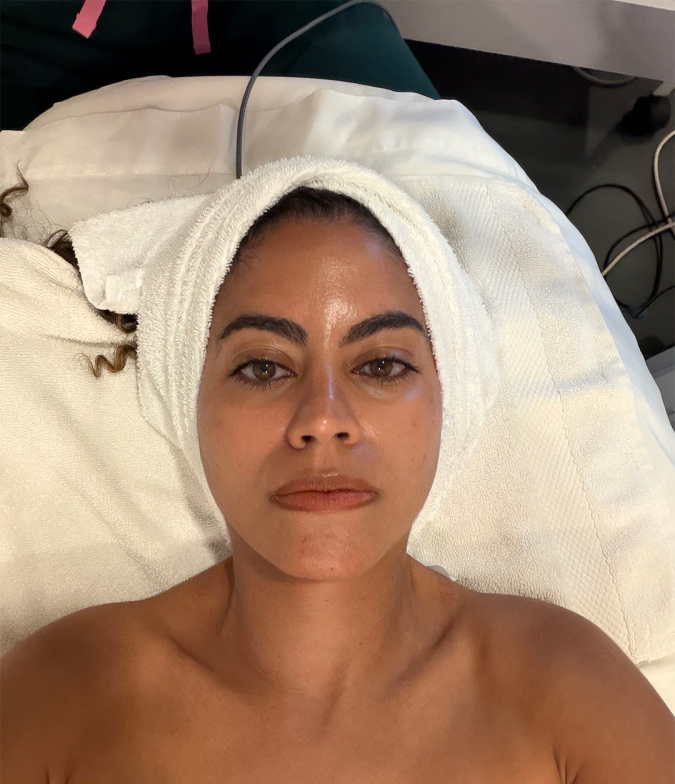
I had XERF done at Joanna Vargas’s spa in Manhattan. According to Vargas, the non-invasive treatment uses monopolar radiofrequency energy at two frequencies—6.78 MHz and 2 MHz—to reach multiple tissue depths in one session. Unlike Morpheus8, it doesn’t combine needles with radiofrequency, and unlike ultrasound-based treatments such as Ultherapy and Sofwave, it relies on RF energy to heat tissue and stimulate collagen.
Because the energy doesn’t target pigment, Vargas explained, XERF can be used across skin tones. That mattered to me. Still, this is my personal experience with the treatment—not a guarantee of how every person’s skin will respond.
The face-only treatment took about an hour. Radiofrequency treatments generate heat, but XERF wasn’t uncomfortable for me. Think of a hot stone massage, but on your face—not so bad, right? The device’s cooling technology helped balance the warmth. I occasionally felt small pinches, but it never became painful or unbearably hot, even on my thin-skinned forehead.
Immediately afterward, my skin looked brighter and calmer, with no visible signs of post-inflammatory hyperpigmentation. The shadows around my smile lines appeared softer, my already-defined jawline looked a little tighter, and my cheekbones had a subtle lift. I went in hoping to glow right away, and I did.
My Results After One Month
The changes weren’t facelift-level dramatic, but I noticed them. Over the following days, the shadows around my smile lines continued to soften. My complexion looked smoother and more refined, and my face appeared more defined. I had also started noticing more movement in my forehead when I talked or made expressions; after XERF, that area seemed a bit firmer, though the treatment didn’t freeze movement the way Botox would.
XERF did not do much for the subtle hollowing under my eyes—and I didn’t expect it to. That issue comes from volume loss, which a skin-tightening treatment isn’t designed to replace. I appreciated that the treatment refined what was already there rather than changing my face’s shape.
Vargas offered a similarly measured explanation of what patients can expect around smile lines: XERF won’t erase folds the way filler can, but it may strengthen and tighten the surrounding skin so the area appears smoother and more supported. That description matches my results. My face still looks like my face—just slightly tighter, smoother, and more lifted.
XERF isn’t the only thing influencing my skin. I follow a customized daily skincare routine, use retinol and barrier-supporting products, and have been consistent about SPF for years. I also use a few at-home devices and maintain lifestyle habits that support my overall health. There’s no honest way to attribute every bit of glow to a single treatment.
Because collagen remodeling takes time, the full effects can continue developing for up to three months. One month later, my skin has continued to improve week after week. Once I reach the three-month mark, I’ll decide whether I want another session or would rather treat it as an annual maintenance option.
My Honest Verdict
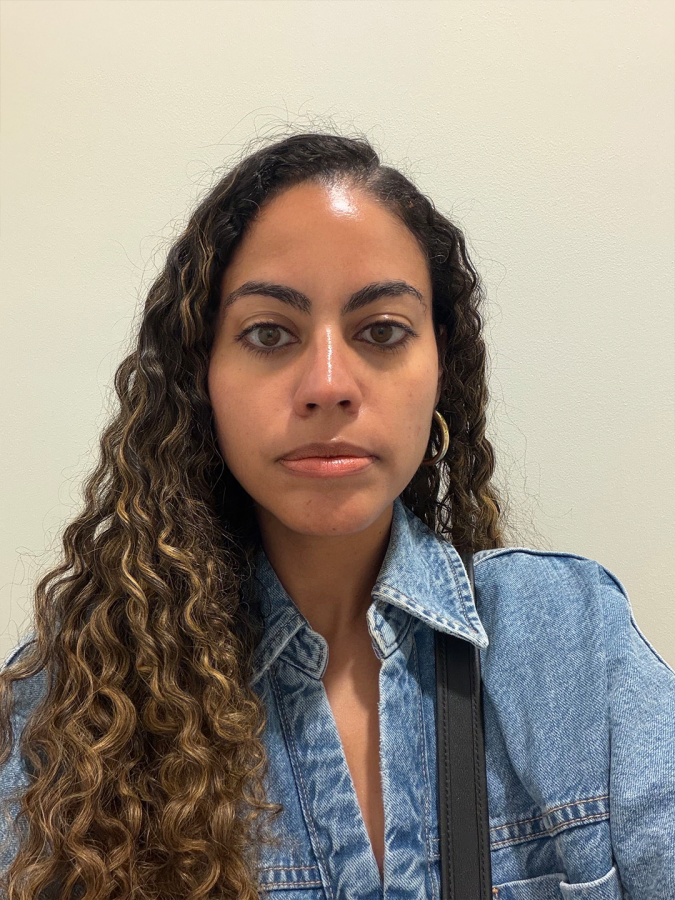
I never thought I’d find a treatment that could give my brown complexion that coveted glass-skin effect while addressing the subtle signs of aging I’m beginning to notice at 40, but XERF came impressively close. My skin looks incredible without makeup and genuinely feels smoother, tighter, and slightly lifted.
Does it look like the “mini non-invasive facelift” people are calling it on TikTok? Not exactly. Anyone expecting dramatic facial reshaping from one session may be disappointed. But for me, the lack of downtime was a major benefit, and I can’t deny that the tightening and skin-refining effects are noticeable.
It’s a 10/10 for me—this Latina is officially sold. I’m just keeping my expectations grounded while I wait to see what my face looks like at the three-month mark.


