5 Haunting Destinations in Latin America Worth Visiting
These locations in Latin America have a very creepy appeal for anyone interested in dark tourism

Javier Pamplona, CC BY-SA 4.0 , via Wikimedia Commons

While countries throughout Latin America are filled with beautiful sights, many are also home to some of the most haunting places in the world. And we’re not just talking about locations plagued by ghosts and paranormal activity. There are several spots that have mysterious pasts and are surrounded by tragedy. Others are affected by unexplained phenomena or have been completely abandoned. Whether you believe in the supernatural or not, there’s something undeniably creepy about the places we’re about to mention. These areas possess plenty of appeal for anyone who’s interested in spooky travel or dark tourism. Get ready to discover some of the most strange and morbid sites in Latin America.
Armero, Colombia

On November 13, 1985, the town of Armero in Colombia would experience a terrifying natural disaster. The city, which is located about 100 miles west of Bogotá, was recognized as a major cotton-producing region and flourished agriculturally and economically. At the time, it had a population of nearly 30,000. Not too far from Armero was Nevado del Ruiz, a huge volcano that had been showing indications of an impending eruption. Despite the suspicious smoke that had been wafting from the mountain and warnings from scientists to evacuate the surrounding areas, the city’s mayor and priest reassured the locals that they were not in danger. They were wrong.
At 9 p.m. on that fateful day, the volcano erupted. This melted the glacier at its peak and released large amounts of volcanic mud that eventually rushed down into Armero. Within minutes, about 20,000 people were submerged in the mudflow and homes were devastated. Thousands of people died because they were trapped or drowned. One of the most infamous victims was a teenage girl named Omayra Sanchez who was immersed waist-deep in mud and couldn’t escape. Even though she was locked in that position for two days, she sang and spoke to rescuers and journalists remaining hopeful before passing away.
Today, Armero is a ghost town. Remnants of buildings still stand and have become engulfed by the surrounding greenery. Memorials have been set up in honor of the lives lost. Surviving family members and tourists visit the site to see the devastation up close. Others come to the place for darker purposes and occult practices. For a time, it was believed that an Armero priest, Fr. Pedro Maria Ramirez, had placed a curse on the town before being murdered by an angry mob due to political unrest decades before. It was said he recited the words, “In Armero, no stone will remain overturned.” But scholars have since discovered that the quote was mistakenly attributed to him. Some locals believe the spirits of those who perished continue to linger here. This lore has drawn paranormal investigators to the area, seeking evidence of the supernatural.
La Noria Cemetery (Atacama Desert, Chile)

In 1826, a saltpeter mining town called La Noria was founded in the harsh climate of the Atacama Desert in Chile. For a period of time, it was an important industrial site and many residents lived in the surrounding area. But working conditions for those who toiled in the mines were cruel and inhumane, bordering on slavery. This led many men, women, and children to their untimely deaths. Corpses were carelessly discarded and laid in tattered graves.
When the saltpeter industry began to decline, the town was deserted during the 1920s. What has stayed behind is the ominous graveyard with its numerous wooden crosses scattered across the desertscape. Looting has become a problem, so coffins and bones are exposed. It’s said that at night, the restless spirits of those buried at La Noria Cemetery rise and make their presence known. Brave visitors to the site have reported hearing screams and movement and seeing apparitions. The area has garnered the attention of many paranormal investigators and continues to be a spot of intense interest to thrill seekers. It’s in a remote location and is extremely difficult to get to, so it’s probably best to take in the view through photos…unless you’re up for a challenge.
Presidio Modelo (La Isla de la Juventud, Cuba)
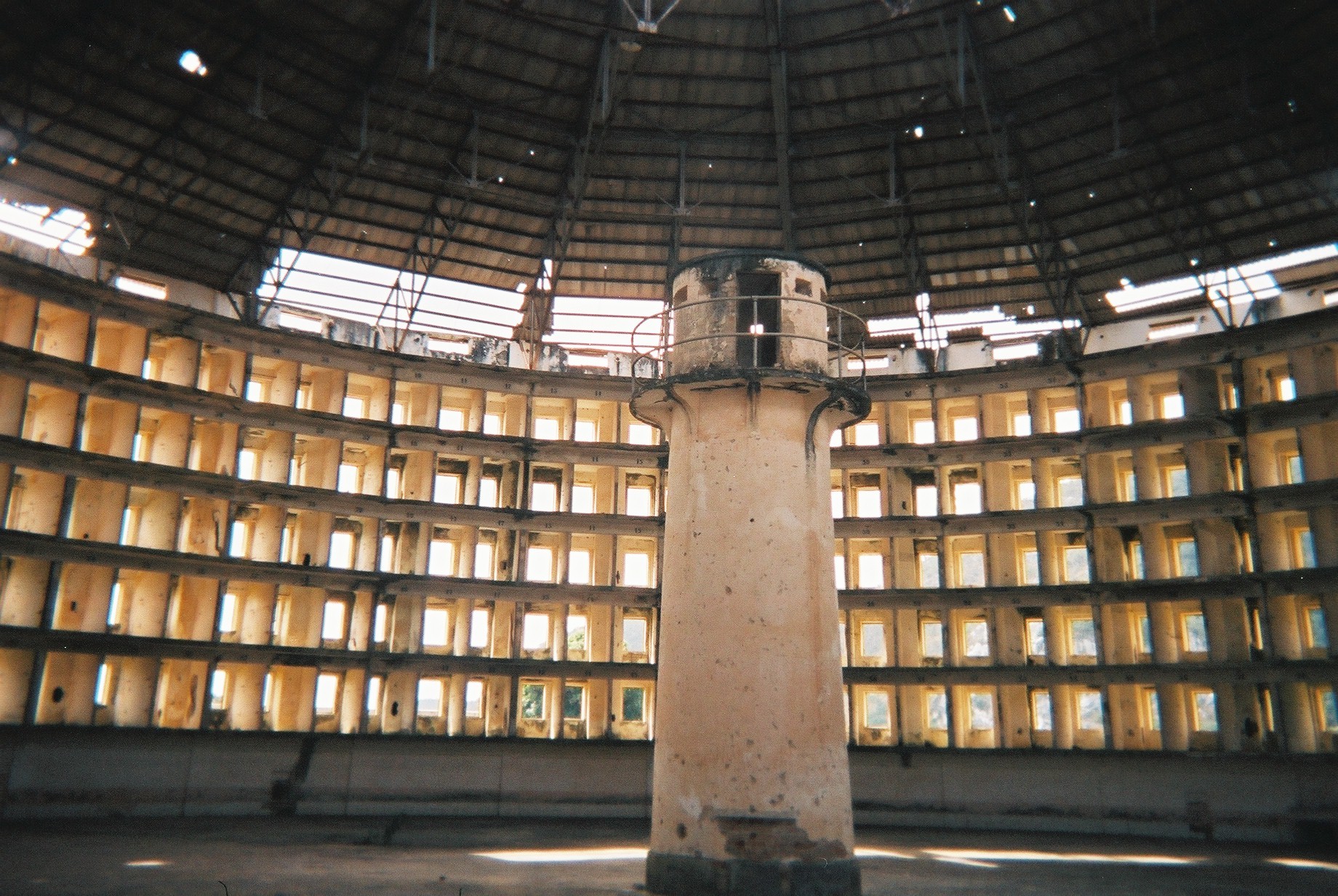
Let’s be real—abandoned structures are just plain eerie, especially when they were former prisons. Presidio Modelo is located on La Isla de la Juventud (Isle of Youth), which is about 30 miles off the southern coast of Cuba. When it was an active institution, it hosted numerous prisoners, including Fidel Castro in 1952. The facility consisted of five multi-storied buildings built in a panopticon style, which is a circular design that includes a watch tower in the center. This made it easier to keep an eye on inmates.
It’s been shut down for more than 50 years, but the dilapidated penitentiary remains. Presidio Modelo has been recognized as a national monument and has a museum where visitors are welcome. However, it’s debated whether anyone is allowed to go inside the actual prison buildings, so proceed with caution. While there have been no reported hauntings, many swear that the ghosts of the prisoners remain trapped within its cells and that a morbid energy permeates the place. It’s also considered one of Cuba’s most haunted locations.
Temple of Santa Muerte (Tepito, Mexico)

Santa Muerte, aka La Huesuda (the Bony Lady), has risen in popularity over recent decades. She’s a controversial figure when it comes to the Catholic Church, but that hasn’t stopped her number of devotees from growing. It’s believed the skeletal saint has Pre-Columbian origins in Mexico. Today, she’s revered by many Latin Americans who practice folk Catholicism (a blend of traditional Catholic practices and Indigenous spiritual beliefs) or brujeria. She’s viewed as a patron saint to society’s outcasts, from the impoverished to criminals, and is prayed to for protection and healing.
In 2001, a woman named Enriqueta Romero established the first known Santa Muerte shrine. It’s located in the Tepito neighborhood of Mexico City. Here, there’s an impressive statue erected of the Bony Lady where people can come to pray and leave offerings. Every month, a special gathering is held to recite the Santa Muerte rosary.
Villa Epecuén (Carhué, Argentina)

Images of Villa Epecuén look like they could be stills from an apocalyptic horror movie. Visiting abandoned places is on the rise when it comes to dark tourism, and this location makes for an ideal pilgrimage. Once upon a time, this village was a popular tourist destination between the 1920s and 1970s. It’s located within the Buenos Aires Province along Lago Epecuén, a salt lake that was promoted for its healing properties. Thousands flocked over the decades to vacation here. In November 1985, disaster struck. Due to heavy rainfall, the lake overflowed with water and the weight broke through a dam, causing major flooding in the area. The main resort along with hundreds of businesses and homes were overtaken by water and the area had to be deserted. The town was entirely submerged underwater for close to 25 years until the water finally began to recede in 2009.
Remnants of Villa Epecuén are visible and have been bleached white because of the salt water. The village lies in utter destruction and is considered unsalvageable by the government. You can see crumbling buildings and slaughterhouses, ravaged trees, and corroded vehicles. Pablo Novak, a former resident of Epecuén, gained notoriety when he returned to his hometown in 2009 to live out the rest of his years alone among the ruins. He lived in an abandoned house and had a grandson that would check up on him daily. He passed away in 2024, bringing the population of the town back to zero.
Now, Villa Epecuén attracts a different kind of tourism and retains its appeal despite its desolate state. It goes to show that there is beauty in decay. Transportation to and tours of the town can be arranged in the nearby village of Carhué.


